Hair Transplant in Istanbul: How Many Grafts Do You Really Need?
Hair Transplant in Istanbul has remained one of the most in-demand medical procedures among international patients for over 10 years. But the main question everyone asks before surgery is: how many grafts will I personally need?
Let’s break it down in detail — what transplant methods exist, how the number of grafts is calculated, and why patients from Europe, America, and CIS countries have been choosing Turkey for years.
What Is a Graft and How Is It Counted?
A graft is a follicular unit containing 1 to 4 hairs.
On average:
1 graft = 2–2.5 hairs
3000 grafts ≈ 6000–7500 hairs
The number of grafts depends on:
-
the degree of hair loss (according to the Norwood scale)
-
donor area density
-
desired thickness
-
hair characteristics (thickness, color, curliness)
How Is the Number of Grafts Calculated?
Before a hair transplant, the doctor conducts a detailed evaluation and calculates the required number of grafts individually.
1 Degree of Hair Loss
It is assessed using the Norwood scale — an international classification system that defines the stage of male androgenetic alopecia from 1 to 7.
Briefly:
Stage 1–2 — minimal recession
Stage 3–4 — noticeable hair loss in the frontal area and/or crown
Stage 5–7 — extensive hair loss on the top of the head
Approximate calculation:
Norwood 2–3: 1500–2500 grafts
Norwood 4–5: 3000–4000 grafts
Norwood 6–7: 4500–6000 grafts
⚠️ These are approximate figures — the exact number is determined after evaluating the donor area.
2 Transplant Area Size
The number of grafts is calculated per square centimeter.
On average, 30–45 grafts per 1 cm² are required for natural density.
In the frontal zone, density may be higher to create a natural hairline.
3 Donor Area Density
The donor area includes the back and sides of the head, where follicles are extracted from.
If the density is high, the doctor can safely extract more grafts without creating a visible thinning effect.
If the donor supply is limited, planning must be especially careful — sometimes performed in two stages.
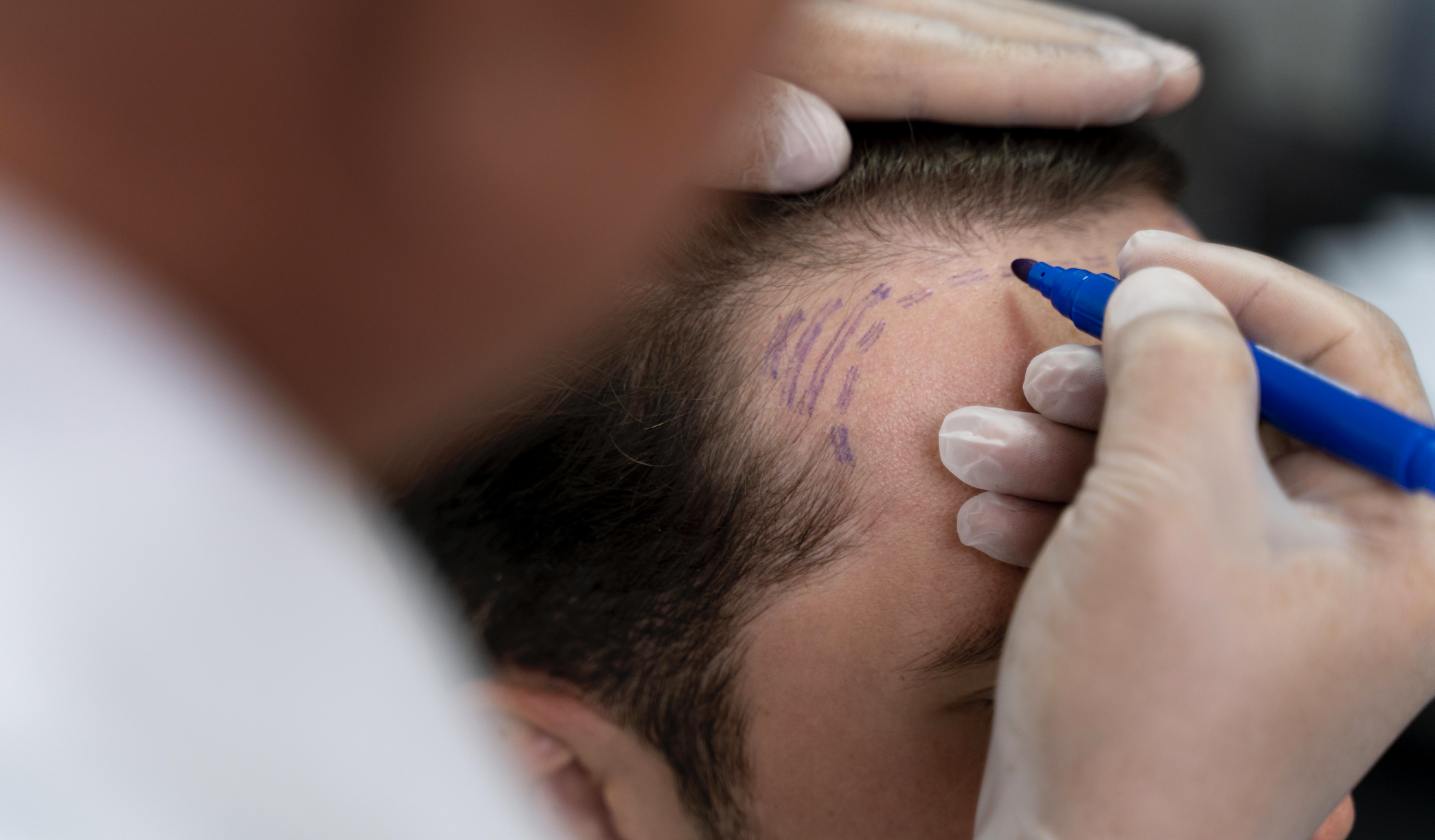
4 Hairline Design
The lower and denser the patient wants the hairline, the more grafts will be required.
An experienced surgeon always considers:
-
the patient’s age
-
possible future hair loss
-
natural facial proportions
📌 Important: A qualified doctor never transplants the “maximum possible.”
Preserving the donor area is key to achieving a natural and long-lasting result for 10–15 years ahead.
Modern Hair Transplant Methods: Which One to Choose?
Today, several hair transplant techniques are used in Istanbul, each with its own features, indications, and advantages. The choice of method depends on the degree of hair loss, donor density, desired thickness, and the patient’s individual characteristics.
1️⃣ FUE Method (Follicular Unit Extraction)
FUE is the most common hair transplant method in Turkey and worldwide. Its popularity is explained by its combination of effectiveness, safety, and relatively short recovery time.
The method involves extracting follicular units (grafts) one by one using a micro-instrument typically 0.6–0.9 mm in diameter. After extraction, the grafts are implanted into the balding area.
Main features of FUE:
-
no linear scar (unlike the old FUT method)
-
minimal skin trauma
-
fast healing
-
possibility of transplanting a large number of grafts in one procedure
This method is especially suitable for patients with significant hair loss who require 3000–5000 grafts. When performed correctly, the donor area maintains a natural appearance.
2️⃣ DHI Method (Direct Hair Implantation)
DHI is an advanced variation of FUE. The main difference lies in the implantation stage.
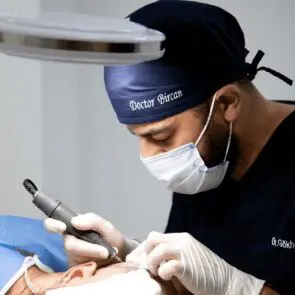
After graft extraction, a special Choi implanter pen is used, allowing the doctor to simultaneously create the channel and implant the follicle. This eliminates the separate channel-creation step.
Advantages of DHI:
-
higher precision of placement
-
control over angle and depth of implantation
-
possibility of transplantation without full shaving
-
high density in the frontal area
DHI is often chosen by patients who want to preserve a natural hairline and achieve the most refined result in the frontal zone. It is especially popular among younger patients and those who prefer not to shave their head completely.
3️⃣ Manual Hair Transplant Technique
The manual technique involves extracting grafts without a motorized instrument — the doctor works entirely by hand.
At first glance, the difference may seem minor, but in the hands of an experienced surgeon, it plays a significant role.
Why it matters:
-
fewer micro-injuries to tissue
-
gentler follicle extraction
-
better control of depth and angle
-
especially delicate work in the temple and hairline areas
The manual method requires high qualification and takes more time but allows maximum preservation of graft quality.
Many experienced Turkish surgeons combine motorized FUE and manual techniques. For example, the main volume may be performed with a motor, while the hairline zone is completed manually to achieve the most natural result.
Why Do International Patients Choose Turkey for Years?
1 Experience and High Patient Flow
Thousands of procedures are performed in Istanbul every month. High patient flow means enormous practical experience for doctors.
2 Price
Average cost:
- 3000–4000 grafts in Turkey: €2000–3000
- The same procedure in Europe: €7000–12000
At the same time, the same technologies are used.
3 All-Inclusive Package
Usually includes:
-
consultation
-
medical tests
-
surgery
-
transfer
-
hotel accommodation
-
interpreter
4 Modern Clinics
Most clinics are equipped with:
-
sterile operating rooms
-
resuscitation equipment
-
certified medical teams
5 Natural Results
Turkish specialists pay great attention to:
-
hairline design
-
hair angle
-
density distribution
This is especially important for patients aged 25–40.
If you are also considering a hair transplant, be sure to watch this video featuring real stories of two patients to learn truthful information about how hair transplantation is performed in Istanbul.
How Many Grafts Do You Need?
Approximate guideline:
Problem | Number of Grafts
Receding hairline | 1500–2500
Frontal area + crown | 3000–4000
Advanced baldness | 4500–6000
However, the exact number is determined only after:
-
photo analysis
-
donor area evaluation
-
online or in-person consultation
Common Patient Mistakes
Despite the popularity of the procedure, many patients make the same mistakes that can affect long-term results.
The first common mistake is choosing a clinic solely based on the lowest price. Extremely cheap offers often mean a high-volume workflow, minimal doctor involvement, and lack of individualized planning. A hair transplant is not a “package service” but a surgical procedure that requires experience and precision.
The second mistake is agreeing to transplant the “maximum number of grafts” without careful donor evaluation. Donor hair is a limited resource. If too many follicles are extracted in one session, it can lead to visible thinning at the back of the head and eliminate the possibility of future procedures.
The third mistake is ignoring the surgeon’s qualifications and experience. It is important to understand who performs each stage of the procedure: hairline design, graft extraction, and implantation. The natural look of the result directly depends on the specialist’s experience and understanding of anatomy and aesthetics.
Another important point is the absence of a long-term strategy. Androgenetic hair loss may continue even after transplantation. If potential future hair loss is not considered, the hairline may look unnatural after several years. That is why proper planning always takes into account the patient’s age and future prognosis.
A hair transplant is an investment in your appearance for years ahead. The right clinic choice and a strategic approach help preserve a natural result and protect the donor area long-term.
Hair transplant in Istanbul is a combination of experience, advanced technology, and affordable pricing.
The number of grafts is calculated individually and depends on the degree of hair loss, the size of the transplant area, and the quality of the donor zone.
A professional approach is not about “as many grafts as possible” but about strategic planning for results lasting 10–20 years.
If you want to find out how many grafts you personally need, simply send photos for a preliminary evaluation.
A proper consultation is the first step toward a natural and dense hairline.