Facelift in Turkey Without Visible Scars — Myth or Reality?
 “Facelift without scars” — a phrase that sounds perfect and is often used in advertising. But is it really true that no traces remain after the surgery? Modern plastic surgery has moved far beyond the idea of rough scars “from ear to ear.” Nevertheless, a completely scarless traditional facelift is not possible. The real question is: how skillfully are the incisions made, where are they located, and how does the healing process proceed? Let’s take a detailed look at what types of sutures are used after a facelift, where they should be placed, what normal recovery looks like, and which signs require a consultation with a surgeon.
Is a Facelift Without Scars Possible?
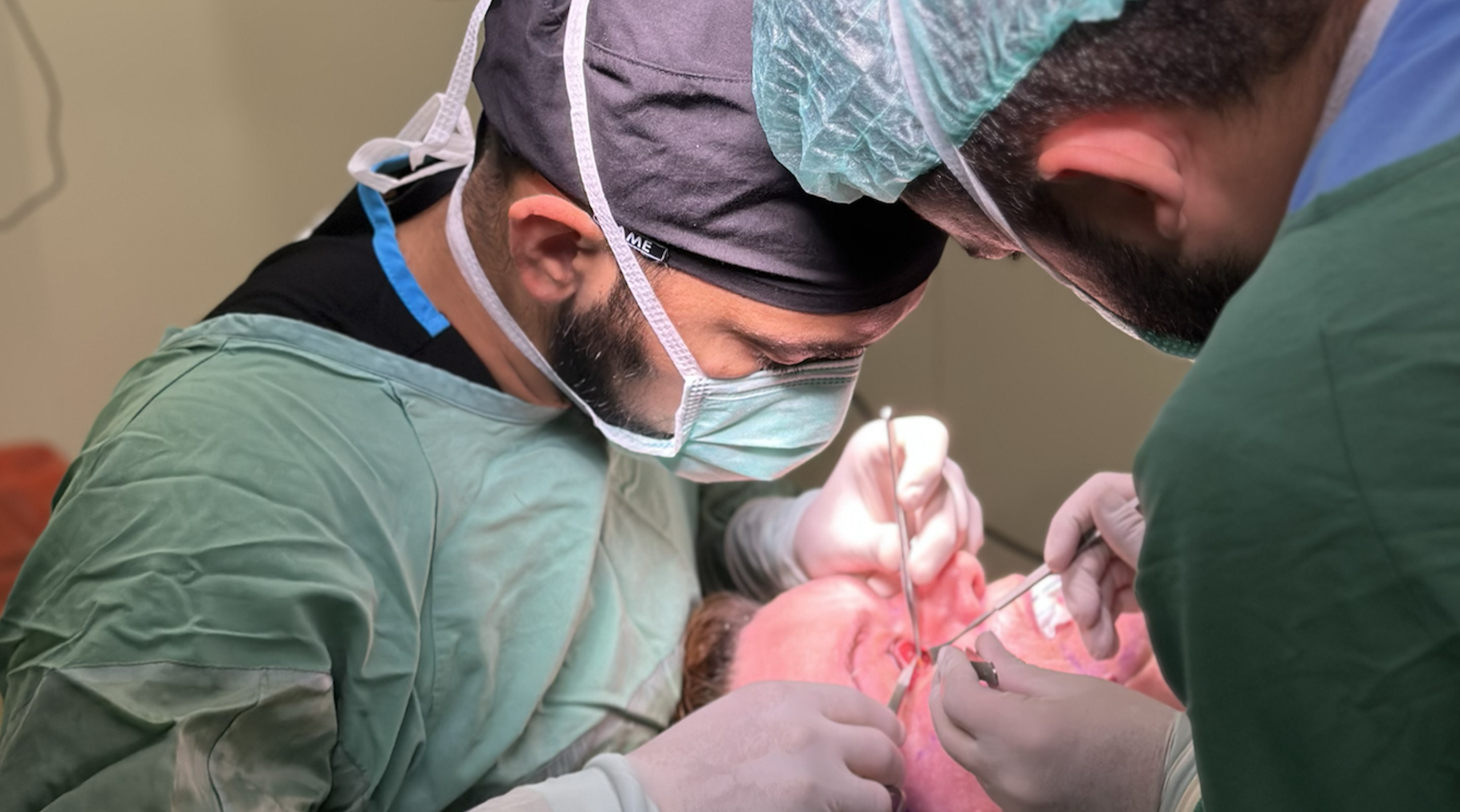
When it comes to a traditional facelift (for example, a Deep Plane Facelift), incisions are mandatory. This is a surgical procedure in which the surgeon works not only with the skin but also with the deeper structures of the face.
It is important to understand: modern surgeons do not simply “stretch the skin,” as was done decades ago. The main work is performed at the level of the muscle-aponeurotic layer — the SMAS. That is why, after a properly performed surgery, the skin is not excessively stretched, and the sutures are thin and neat.
Thus, a “facelift without scars” is more of a marketing term. It is more accurate to speak of minimally visible, well-concealed scars that over time become almost invisible.
Types of Sutures After a Facelift
In a traditional facelift, surgical sutures are placed in layers:
1. Deep (internal) sutures
These fix the SMAS layer and subcutaneous tissue. These structures bear most of the tension, allowing the skin above to lie freely without pressure and minimizing the risk of scar stretching.
2. Skin sutures
This is the final stage of the surgery. After removing excess skin, the edges of the incision are carefully aligned. With proper technique, they match perfectly, without “steps” or misalignment.
Key advantages of layered facelifts:
-
muscles and connective tissue take the load;
-
tissue blood supply is preserved;
-
the risk of ischemia, bluish discoloration, and inflammation is minimized;
-
the suture becomes thin, smooth, and over time practically invisible.
If only the skin is stretched without working on the SMAS layer, all the tension falls on the superficial tissues. As a result, the scar may thicken, widen, or become noticeable.
Where Should the Sutures Be Located?
One of the main patient fears is “scars on the face.” In practice, with a traditional facelift, sutures do not cross the central part of the face.
Standard incision locations:
-
the temporal area, in the hairline;
-
along the natural contour in front of the ear;
-
around the earlobe;
-
behind the ear;
-
sometimes — a small incision under the chin (for work in the neck area).
A skilled surgeon plans the line to follow natural skin folds and anatomical curves. Often, the incision runs along the tragus line — inside the natural contour of the ear. This allows the scar to be maximally concealed even with short hair or tied-back hair.
If the incision is placed in front of the ear and is not hidden by natural anatomical lines, it may become noticeable after healing.
What Does Normal Healing Look Like?
Proper healing occurs in stages:
First weeks:
-
moderate swelling;
-
redness along the suture line;
-
possible slight tissue firmness.
1–2 months:
-
the scar lightens;
-
becomes thin;
-
the surrounding skin is soft, without inflammation.
After several months:
-
the suture fades to the surrounding skin color;
-
it becomes virtually invisible even on close inspection.
It is important to understand: in the early rehabilitation period, minor “steps” or firmness may appear. This is usually due to swelling, not a surgical error. As the tissues recover, these changes resolve.
A good suture is:
-
a straight line;
-
free of thickening;
-
without tension;
-
soft surrounding skin;
-
gradual return to natural color.
Warning Signs of Problems
Sometimes the healing process is disrupted. Pay attention if:
-
the suture remains firm and bumpy after 1–1.5 months;
-
pronounced redness does not fade;
-
pain appears;
-
the skin temperature in the scar area rises;
-
the scar widens.
Possible causes:
-
excessive skin tension;
-
insufficient fixation of the SMAS layer;
-
individual tendency to hypertrophic scarring;
-
improper post-op care;
-
technical errors.
If only the skin is stretched without deep tissue fixation, the scar may eventually “spread” and become noticeable. In some cases, correction is required, sometimes a revision surgery a year after the procedure.
When to Consult a Surgeon
See your doctor if:
-
the suture remains bright red for a long time;
-
swelling increases;
-
pulsation or pain appears;
-
there is discharge;
-
a thick, rough scar forms.
The earlier a problem is detected, the easier it is to correct during rehabilitation. Sometimes medication or device-based procedures are enough.
How to Care for Sutures Properly
Successful healing depends on three factors:
-
Surgical technique;
-
Genetic characteristics of the patient;
-
Following recommendations.
The main rule — do not self-treat. The internet is full of advice and “miracle creams,” but only your doctor should prescribe treatments.
Basic recommendations:
-
Silicone-based products — often prescribed for up to 4 months to prevent scar thickening.
-
Sun protection — essential. For 8 months, apply a high-SPF cream daily to the scar area. Sun exposure can change scar color and make it permanently visible.
-
Additional procedures (if indicated):
-
mesotherapy to improve microcirculation;
-
PRP (platelet-rich plasma) therapy to accelerate regeneration;
-
laser correction (e.g., CO₂ laser) starting from month 4 — strictly per specialist recommendation.
-
However, it is important to remember: a well-healed suture is primarily the result of precise surgical technique, not the number of procedures.
Why Choosing the Right Surgeon Is Key
The main rule of a good facelift: within a year, no one should realize you’ve had surgery. People notice freshness, tightness, a rested appearance — not the intervention itself.
Layered techniques (Deep Plane) allow you to:
-
avoid excessive skin tension;
-
preserve natural facial expressions;
-
achieve long-lasting results;
-
minimize scar visibility.
When choosing a specialist, pay attention not only to “before and after” photos but also:
-
scar placement;
-
their appearance after 6–12 months;
-
real patient reviews;
-
the surgeon’s experience with deep facial layers.
Conclusion: Are There Any Traces?
Yes, there are incisions in a traditional facelift. But with proper technique, they:
-
are hidden in natural anatomical areas;
-
heal as a thin line;
-
over time, become virtually invisible.
Do not fear the sutures themselves — fear improper technique or excessive skin tension. Modern plastic surgery prioritizes natural results, anatomical precision, and physiological tissue healing.
Facelift surgery is not “stretch and done.” It is meticulous work with the deep structures of the face, where the quality of the result directly depends on the surgeon’s skill.
If you responsibly choose a specialist and follow post-op recommendations, scars cease to be a problem — leaving only a natural, rejuvenated, and harmonious appearance.
If you are considering a facelift in Turkey and want an honest assessment of your situation, submit your request below.
Our specialists will help you:
-
Determine whether you need a surgical facelift or if less invasive methods are sufficient;
-
Choose an experienced plastic surgeon;
-
Estimate the approximate cost of the procedure in Turkey;
-
Receive a personalized recovery plan.
Take the first step toward natural rejuvenation today.