Deviated Nasal Septum: When Treatment Is Necessary and Whether It Can Be Combined with Rhinoplasty
What Is a Deviated Nasal Septum and Why Does It Occur?

A perfectly straight nasal septum is more the exception than the rule. According to medical statistics, up to 80% of people have some degree of deviation from the midline. However, this condition does not always cause discomfort or require treatment.
The nasal septum is a thin bone-and-cartilage structure inside the nose that divides the nasal cavity into two passages. Ideally, it is positioned in the center and allows air to flow evenly through both nostrils. When the septum shifts to one side, airflow becomes uneven: one nostril functions less efficiently while the other compensates. As a result, normal nasal breathing is disrupted.
In medical terms, this condition is called a deviated nasal septum. The deviation can take different forms:
- C-shaped deviation — a bend to one side
- S-shaped deviation — a double curve
- Spurs and ridges — localized bony or cartilaginous protrusions
In some patients, these anatomical changes affect not only breathing but also the external appearance of the nose, causing asymmetry or visible deviation of the nasal bridge.
Main Causes of Nasal Septum Deviation
There are several reasons why septal deviation may develop:
Physiological growth factors
During periods of active growth, the bones and cartilage of the nose may develop unevenly. This is especially common during adolescence.
Nasal trauma
Even old or seemingly minor injuries to the nose can lead to septal deviation. In some cases, the consequences become noticeable years later.
Compensatory changes
Chronic swelling of the nasal mucosa, nasal polyps, or other formations within the nasal cavity can gradually push the septum to one side.
How to Recognize a Deviated Nasal Septum
A deviated septum does not always cause immediate symptoms, but there are signs that often indicate a problem:
- difficulty breathing through one nostril, even without a cold
- persistent dryness inside the nose, crusting, sometimes accompanied by bleeding
- frequent sinus infections, including sinusitis
- reduced sense of smell
- noisy breathing or snoring, especially during sleep
If you notice several of these symptoms at the same time, it is advisable to consult an ENT specialist for evaluation.
Does a “Crooked Nose” Always Require Surgery?
It is important to understand that the external appearance of the nose and the internal condition of the nasal septum are not always related.
The nose may look perfectly straight while the septum inside is significantly deviated. Conversely, external nasal asymmetry does not necessarily mean impaired nasal breathing.
If the deviation does not interfere with breathing, does not cause chronic inflammation, and does not affect quality of life, surgery is not mandatory. In such cases, intervention is performed solely for aesthetic reasons.
However, if a person experiences constant nasal congestion, relies on decongestant sprays, or frequently suffers from sinus infections, this becomes a medical issue rather than a cosmetic one. In these situations, surgical treatment is often justified and can significantly improve overall well-being.
How Is the Nasal Septum Corrected and Can It Be Combined with Shape Correction?
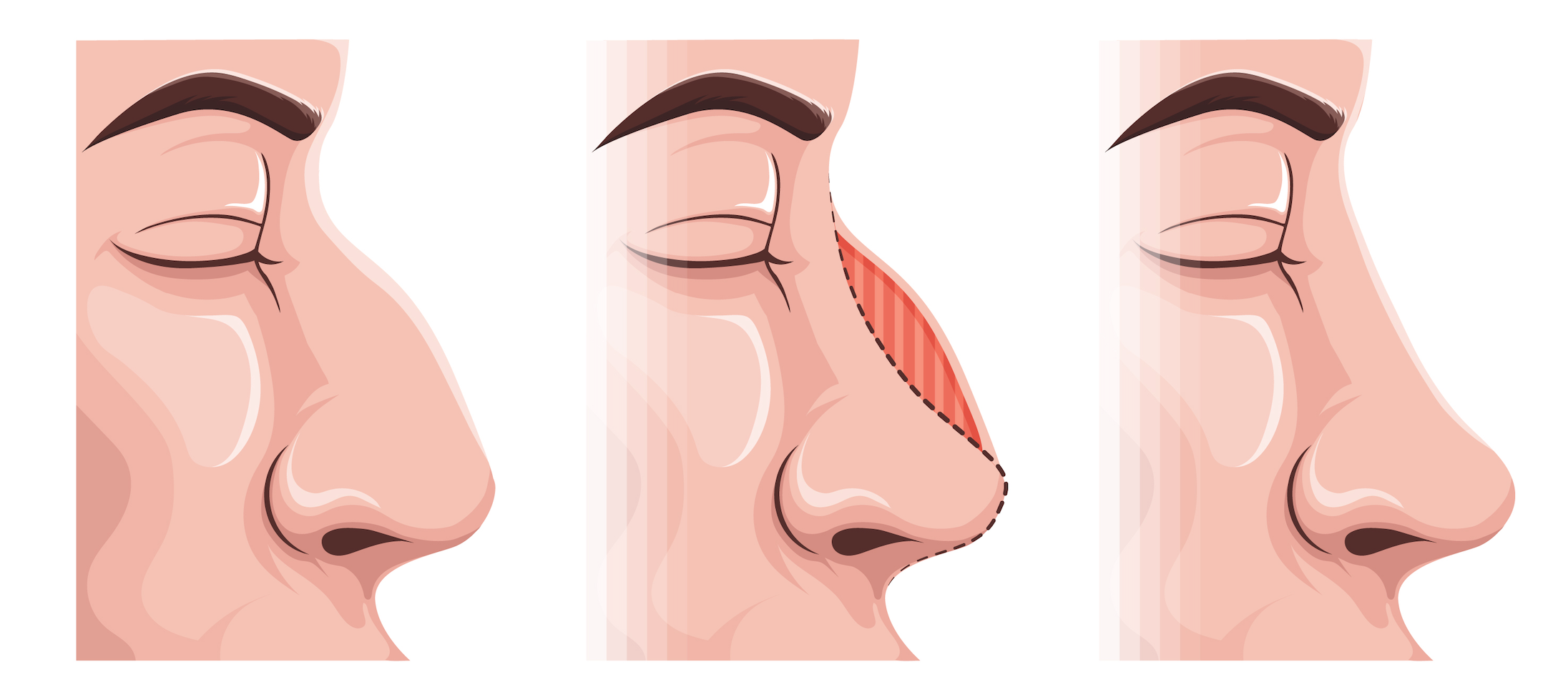
The modern standard of treatment is septoplasty, a surgical procedure aimed at restoring normal nasal breathing.
During the operation, the surgeon works entirely inside the nasal cavity without external incisions, carefully straightening the septum. The use of endoscopic equipment allows for precise and minimally invasive correction. Recovery is usually quick, and most patients return to their normal daily activities within 7–10 days.
But what if the concern is not only breathing, but also the shape of the nose — such as a dorsal hump, a wide nasal bridge, or a bulky nasal tip?
In such cases, septoplasty can be combined with rhinoplasty in a single surgical procedure.
A combined approach includes:
- Septoplasty — correction of the nasal septum to restore proper breathing
- Rhinoplasty — modification of the external shape of the nose
This approach allows both functional and aesthetic issues to be addressed at once, reduces overall recovery time, and helps achieve a balanced, harmonious result.
The surgery is performed under general anesthesia and is not painful. Increasingly, surgeons use soft silicone splints instead of rigid nasal packing, allowing patients to breathe more comfortably during recovery. Swelling gradually subsides over several weeks, while the final result becomes fully visible after a few months.
Conclusion
Persistent nasal congestion, dependence on nasal sprays, and frequent infections are not conditions that should be ignored. A deviated nasal septum is a common but completely treatable issue.
Modern medical techniques make it possible not only to restore free nasal breathing but also, when desired, to correct the shape of the nose during the same procedure. Septoplasty and rhinoplasty can be performed simultaneously, making treatment efficient, comfortable, and predictable. The ability to breathe freely and feel confident is an investment in quality of life that is truly worth it.
If you would like to receive a free consultation, please leave your contact details and our medical specialists will get in touch with you as soon as possible.